How Luxury Hotel Cleaning Is Reshaping Commercial Janitorial
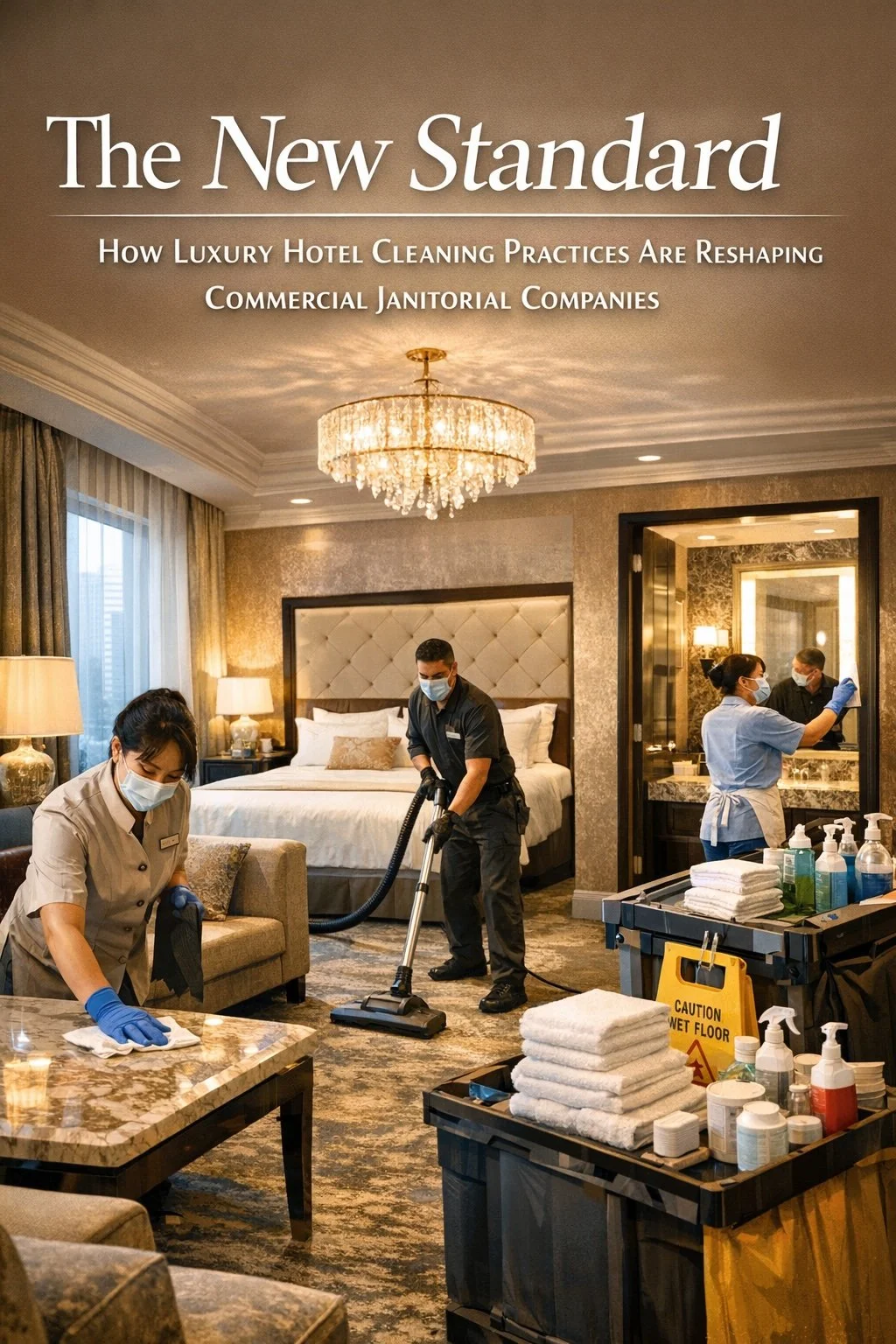
In today's evolving cleaning landscape, luxury hotel housekeeping standards are no longer confined to high-end hospitality. They are increasingly influencing expectations across offices, healthcare facilities, educational campuses, and commercial spaces. What was once considered "five-star" service is quickly becoming the baseline. Commercial janitorial companies that recognize this shift are redefining their service models, while those that do not risk falling behind.
The Rise of Elevated Expectations
Luxury hotels have always operated under intense scrutiny, particularly around cleanliness. Detailed brand standards, guest feedback mechanisms, and rigorous inspection programs ensure that quality remains consistent across every guestroom and public space. These standards emphasize not only cleanliness, but also presentation, efficiency, and the overall experience.
Because hospitality cleanliness directly impacts reputation and guest loyalty, hotels invest heavily in training, inspection processes, and consistency. Cleanliness is not simply about removing dirt—it is about creating a seamless experience that reflects attention to detail. In hospitality, even subtle lapses can influence guest satisfaction and brand perception.
As corporate clients and facility managers increasingly expect similar experiences for employees, tenants, and visitors, these luxury-driven expectations are migrating into the commercial janitorial sector.
From "Clean" to "Experience-Based Cleaning"
Traditional janitorial programs focused on task completion: empty trash, vacuum floors, clean restrooms. Luxury hotel practices, however, emphasize presentation, precision, and sensory experience. This includes:
- Consistent visual symmetry and detail orientation
- Fresh, neutral scent standards
- High-touch surface attention
- Floor, fixture, and furniture presentation
- Staff appearance and professionalism
Commercial clients are now expecting these same outcomes. Offices want lobbies that mirror hotel-level cleanliness. Healthcare facilities seek hospitality-style room presentation. Universities aim to elevate student and visitor experiences through better-maintained spaces.
The conversation is shifting from "Did the task get done?" to "How does the space look and feel?" That mindset originates directly from luxury hospitality.
Uniforms and First Impressions Are Becoming Part of the Cleaning Standard
One of the most visible influences from luxury hotels is the emphasis on professional appearance and first impressions. In hospitality, housekeeping team members are viewed as part of the guest experience, and uniforms are designed to project professionalism, cleanliness, and brand alignment. The same expectation is now emerging within commercial janitorial services.
Clients increasingly recognize that the first impression of a facility is formed within seconds—often before anyone notices the quality of the cleaning itself. A well-uniformed, professional-looking team reinforces confidence, while inconsistent attire can unintentionally signal a lack of organization or quality.
Luxury-inspired practices encourage janitorial companies to focus on:
- Clean, consistent, and professional uniforms
- Visible name badges to promote accountability
- Coordinated appearance standards across teams
- Grooming expectations aligned with brand image
- Staff presence that supports a welcoming environment
These elements go beyond aesthetics. They communicate professionalism, build trust, and reinforce the perception of quality. Just as a luxury hotel understands that presentation sets the tone for the entire stay, commercial janitorial providers are recognizing that uniforms and first impressions are now essential components of modern cleaning programs.
Training Is Becoming More Structured and Hospitality-Inspired
Luxury hotels rely on structured onboarding, daily lineups, and consistent inspection protocols. Commercial janitorial companies are now adopting similar frameworks. Instead of basic orientation, organizations are implementing:
- Standardized cleaning sequences
- Visual inspection checklists
- Quality scoring systems
- Coaching and performance feedback
- Soft-skill training for customer interaction
This approach elevates the role of frontline staff from task performers to brand ambassadors. In luxury hotels, every housekeeper understands they are part of the guest experience. Commercial cleaning companies are beginning to embrace that same philosophy.
Technology and Data Are Driving Precision
Luxury hospitality has long used detailed audits and scoring tools to maintain consistency across properties. Commercial cleaning providers are now following suit, leveraging digital tools and data-driven insights. Examples include:
- Digital inspection platforms
- Real-time quality dashboards
- Workloading and scheduling tools
- Automated reporting for clients
- Robotics for repetitive floor care
These tools allow janitorial companies to deliver consistency similar to luxury hotel housekeeping operations, while also improving transparency and accountability.
Sustainability Expectations Are Increasing
Luxury hotels have also played a major role in elevating sustainability standards. Eco-friendly cleaning products, reduced chemical exposure, and improved indoor air quality are now widely expected. Commercial clients increasingly want:
- Safer cleaning products
- Reduced chemical exposure
- Sustainable packaging
- Protection of furnishings and finishes
- Healthier indoor environments
This aligns closely with hospitality initiatives, where sustainability contributes both to guest experience and brand reputation.
The Shift Toward Premium Service Models
Another key change is the rise of premium cleaning offerings. Rather than competing solely on price, janitorial companies are differentiating themselves through elevated service. Luxury hotel practices demonstrate that:
- Higher standards improve perception
- Consistency builds trust
- Detail-driven cleaning enhances experience
- Professional presentation reflects brand quality
Commercial cleaning companies that embrace these principles often command higher value and stronger client retention.
Labor Challenges Are Reinforcing the Shift
Labor shortages have forced organizations to rethink productivity. Hospitality has long focused on maximizing performance through training, engagement, and workflow efficiency. The janitorial industry is now adopting similar approaches as it balances quality expectations with limited staffing resources. This mirrors luxury hotel housekeeping strategies that emphasize:
- Standardized processes
- Efficient workflows
- Strong leadership and engagement
- Quality validation programs
Rather than simply adding labor, organizations are improving performance through better structure and leadership.
The New Competitive Advantage
Commercial janitorial companies that adopt luxury-inspired practices gain several advantages:
- Stronger client satisfaction
- Improved consistency and quality
- Higher perceived value
- Better employee engagement
- Differentiation from competitors
In many ways, luxury hotel housekeeping has become the blueprint for the future of commercial cleaning.
The Future: Hospitality-Level Clean Everywhere
The lines between hospitality and commercial cleaning continue to blur. Clients now expect environments that are not only clean but polished, welcoming, and experience-driven. This evolution is reshaping service models, training programs, and operational strategies across the janitorial industry.
What was once considered exceptional is now becoming standard. Luxury hotel cleaning practices—focused on precision, presentation, consistency, and experience—are redefining expectations in offices, hospitals, campuses, and commercial facilities.
The message for janitorial companies is clear: the future belongs to those who think less like contractors and more like hospitality professionals.
About the Author
David Green is the Founder and CEO of Rediscover Clean, bringing nearly four decades of experience in luxury hotel housekeeping and healthcare environmental services. His unique background allows him to help organizations adopt hospitality-level cleaning standards, improving quality, consistency, and customer experience across a wide range of facilities. He can be reached at solutions@rediscoverclean.com or visit www.rediscoverclean.com.
Internal References
Frequently Asked Questions
How are luxury hotel cleaning standards changing commercial janitorial work?
Expectations are shifting from task completion ("Did the trash get emptied?") to experience-based cleaning ("How does the space look and feel?").
What does "experience-based cleaning" mean?
Consistent visual symmetry and detail, fresh neutral scent, high-touch surface attention, fixture and furniture presentation, and staff professionalism.
Why do uniforms and first impressions matter in janitorial services now?
A facility's first impression forms within seconds; clean, consistent uniforms and visible name badges build trust and signal quality and accountability.
How are janitorial companies using technology and data?
Digital inspection platforms, real-time quality dashboards, workloading and scheduling tools, automated client reporting, and robotics for repetitive floor care.
What's the competitive advantage of adopting luxury-inspired practices?
Stronger client satisfaction, improved consistency and quality, higher perceived value, better employee engagement, and clear differentiation from price-only competitors.
Ready to elevate your standards?
Connect with us to design operational protocols tailored to your property.